
We're releasing Darwin-4B-David, the first second-generation model in the Darwin Opus family. By evolving an already-evolved model, it achieves 85.0% on GPQA Diamond โ surpassing its 58.6% original ancestor and even gemma-4-31B (84.3%) โ with just 4.5B parameters.
Second-Generation Evolution Most merges start from a base model and produce a single offspring. Darwin-4B-David breaks this pattern. The Father (Darwin-4B-Opus) was already evolved from gemma-4-E4B-it with Claude Opus reasoning distillation โ a Gen-1 model. The Mother (DavidAU's DECKARD-Expresso-Universe) brings Unsloth deep tuning across 5 in-house datasets with thinking mode by default. Crossbreeding these two produced the first Gen-2 Darwin model.
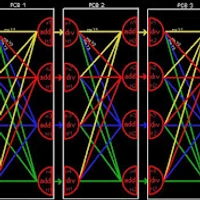
Darwin V6's Model MRI scanned both parents across all 42 layers, assigning independent optimal ratios per layer. The Mother's creativity and Korean language hotspot (Layer 22-25, weight 0.95) was maximally absorbed, while the Father's reasoning core (Layer 30-40, weight 0.48) was preserved. This is "Merge = Evolve" applied recursively โ evolution of evolution.
Benchmarks Darwin-4B-David scores 85.0% on GPQA Diamond (+26.4%p over original 58.6%), evaluated generatively with maj@8 (8 generations per question, majority vote), Epoch AI prompt format, thinking mode enabled, 50 sampled questions. On ARC-Challenge (25-shot, loglikelihood), both score 64.93% โ expected, as loglikelihood doesn't capture thinking-mode reasoning differences.
Why This Matters gemma-4-31B (30.7B) scores 84.3%. Darwin-4B-David surpasses it at 1/7th the size โ no training, no RL, just 45 minutes of MRI-guided DARE-TIES on one H100. The name "David" honors Mother creator DavidAU and evokes David vs. Goliath.
๐ World Model Bench โ does your world model actually think?
FID measures realism. FVD measures smoothness. But neither tells you whether the model understood the scene.
We just released WM Bench โ the first benchmark for cognitive intelligence in world models. The core question: when a beast charges from 3 meters away, does the model know to sprint โ not walk? Does it respond differently to a human vs an animal? Does it remember the left corridor was blocked two steps ago?
Those are cognitive questions. No existing benchmark asks them. So we built one.
- ๐ P1 Perception (25%) โ Can it read the scene? - ๐ง P2 Cognition (45%) โ Does it predict threats, escalate emotions, utilize memory? - ๐ฅ P3 Embodiment (30%) โ Does the body respond with the right motion?
All evaluation is via simple JSON I/O โ no 3D engine, no special hardware. Any model with an API can participate.
We also built PROMETHEUS as a live reference implementation โ runs in your browser on a T4, no install needed. Combines FloodDiffusion motion generation with a LLM cognitive brain (Perceive โ Predict โ Decide โ Act). Scored 726/1000 (Grade B) on Track C โ the only directly verified model so far. Submissions from other teams very welcome.
๐๏ธ Smol AI WorldCup: A 4B Model Just Beat 8B โ Here's the Data
We evaluated 18 small language models from 12 makers on 125 questions across 7 languages. The results challenge the assumption that bigger is always better.
โ A 1.3B model fabricates confident fake content 80% of the time when prompted with nonexistent entities. Qwen3 family hits 100% trap detection across all sizes.
โ Qwen3-1.7B (1.2GB) outscores Mistral-7B, Llama-3.1-8B, and DeepSeek-R1-14B. Latest architecture at 1.7B beats older architecture at 14B.
What makes this benchmark different?
Most benchmarks ask "how smart?" โ we measure five axes simultaneously: Size, Honesty, Intelligence, Fast, Thrift (SHIFT). Our ranking metric WCS = sqrt(SHIFT x PIR_norm) rewards models that are both high-quality AND efficient. Smart but massive? Low rank. Tiny but poor? Also low.